Julie & Julia (dir. Nora Ephron, starring Meryl Streep and Amy Adams)

One of Nora Ephron’s most beloved films among Hollywood peers and generations of cinephiles, Julie & Julia is about far more than cooking and professional achievement. It is a remarkable story of how professional growth begins not simply with an idea or inspiration, but with the discipline of maintaining a blog (read: doing the work). Julie (Amy Adams) grows stronger not because she suddenly discovers her calling, but because she keeps the small promise she has made to herself, day after day.
Partnership here takes shape not only through her relationship with her husband and her readers, but also through an invisible dialogue between two women living in different eras. Julia Child (played by Meryl Streep) becomes Julie’s teacher, without ever knowing it.
As a director and screenwriter who, through the female characters in her 1990s romantic comedies, helped transform women from merely functional characters into independent, self-directed ones, Nora Ephron shows that a career is built on consistency, not loud ambition. And that the greatest achievements often begin with hundreds of seemingly insignificant steps that gradually shape a new professional identity.
Ford v Ferrari (dir. James Mangold, starring Matt Damon and Christian Bale)

Ford v Ferrari reminds us that the most significant results are rarely the achievement of one person, and that true innovation emerges where different personalities, experiences, and ways of thinking meet. The exceptional professional partnership between engineer Carroll Shelby and racing driver Ken Miles is built on mutual respect, even amid their constant disagreements. Beyond the duo’s fast-paced and dramatic relationship on screen, Christian Bale’s approach to his role is equally inspiring: he lost 30 kg, took special driving lessons at the school of former racing driver Bob Bondurant, and trained for weeks with another specialist, Robert Nagl, to perform complex stunts and dangerous driving scenes himself.
At the same time, the film shows that the greatest obstacle is often not technology, but the corporate environment, where executives’ ambitions and internal politics can stand in the way of talent. James Mangold shows that a company’s growth depends on whether we are willing to entrust our life’s work to a team, to other specialists, and to different parts of the organization. Sometimes, the best leadership means letting go of control.
Fire of Love (dir. Sara Dosa, based on the archive of Katia and Maurice Krafft)

At first glance, the Oscar-nominated Fire of Love is a documentary about volcanoes, brought to life through breathtaking and diverse archival footage. In reality, however, it is a story about a rare form of partnership, in which love and profession become one. The filmmakers had access to 200 hours of 16mm film, 50 hours of television footage, and thousands of archival photographs, which, through a thoughtful and skillful editorial approach, were transformed into a cohesive cinematic work.
French volcanologists Katia and Maurice Krafft build not only a family, but also a shared scientific life, in which their personal relationship deepens their professional curiosity. Their achievements would have been impossible without a constant exchange of ideas, trust, and a shared purpose.
Director and screenwriter Sara Dosa portrays a partnership with almost no sense of competition: two people who become stronger precisely through working and being together. Their story reminds us that careers are not always built on competition; sometimes they grow through shared values and a common mission. That is why the legacy they left behind is far greater than the sum of two individual biographies.
Pollock (dir. Ed Harris, starring Ed Harris, Marcia Gay Harden)
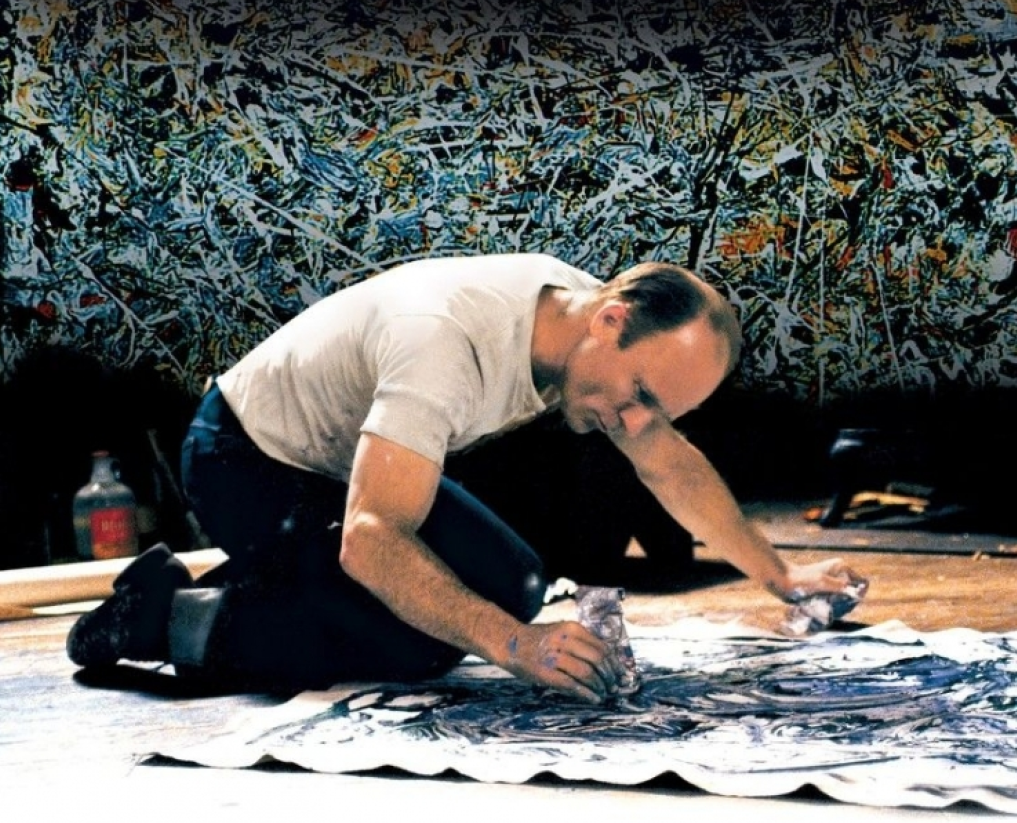
Ed Harris’s Pollock explores the price of creative success, reminding us that talent alone is not enough to guarantee a sustainable career. In this actor-director biographical film, painter Jackson Pollock is constantly torn between creative freedom and the demands of the professional environment, where relationships with galleries, art critics, and the people closest to him matter deeply.
Lee Krasner, played by Marcia Gay Harden, has a particularly important role. She becomes not only his life partner, but also a guiding art manager who introduces him to New York’s most influential artists, critics, and curators. An accomplished artist and intellectual in her own right, she becomes his strongest support and, at times, a partner who sacrifices her own ambitions for his.
The film shows that professional growth depends not only on ability, but also on emotional maturity. When inner struggles begin to take control, they gradually erode professional success as well. True success is impossible without finding a balance between work, relationships, and one’s inner world.
Moneyball (dir. Bennett Miller, starring Brad Pitt and Jonah Hill)

Although Moneyball is not the most famous sports story despite its impressive star cast, it shows how the growth of a team and its people begins with the willingness to challenge established rules. Billy Beane (played by Brad Pitt), the general manager of a baseball club, does not have the biggest budget, the strongest team, or the broadest support. So he looks for a competitive advantage not in financial resources, but in a different way of thinking.
His partnership with a young analyst (Jonah Hill) becomes a compelling example of how different generations and approaches can transform an entire field: bringing people together around a shared idea, moving a team and an industry forward, while encouraging, inspiring, and motivating others along the way.
For Brad Pitt, the project became an important step in his journey from Hollywood and international movie star to a more mainstream, critically respected producer. Under director Bennett Miller’s approach and the writing of Steven Zaillian and Aaron Sorkin, the film shows that in any organization, new ideas inevitably face resistance from established systems. A leader’s career is shaped not only by the ability to make the right decisions, but also by the ability to stand by them when almost no one around believes in them.